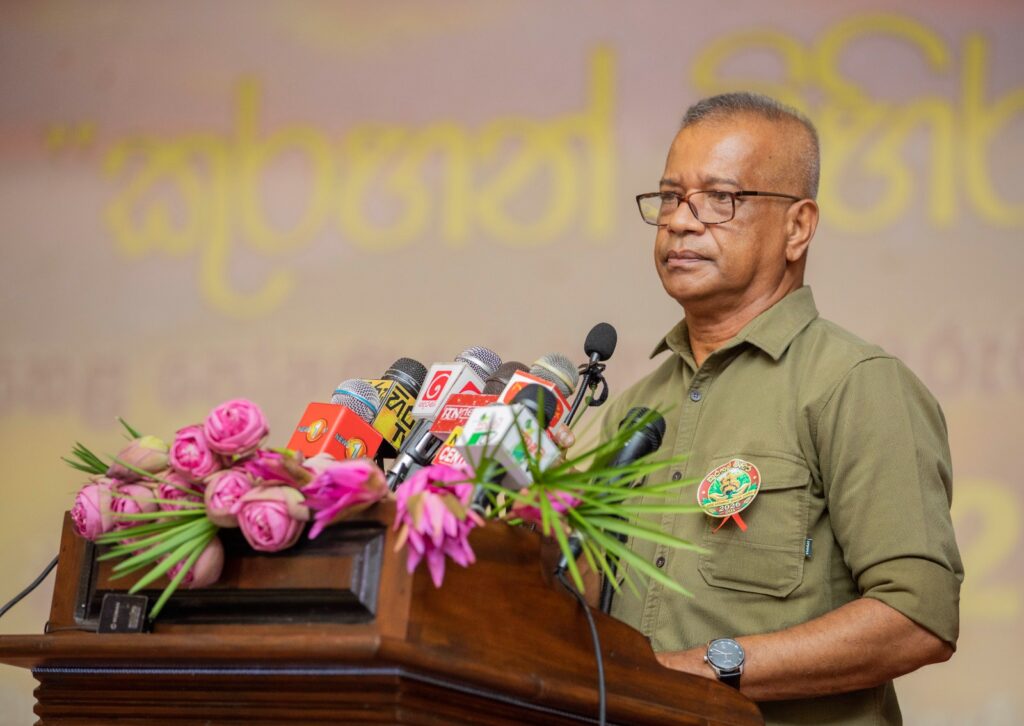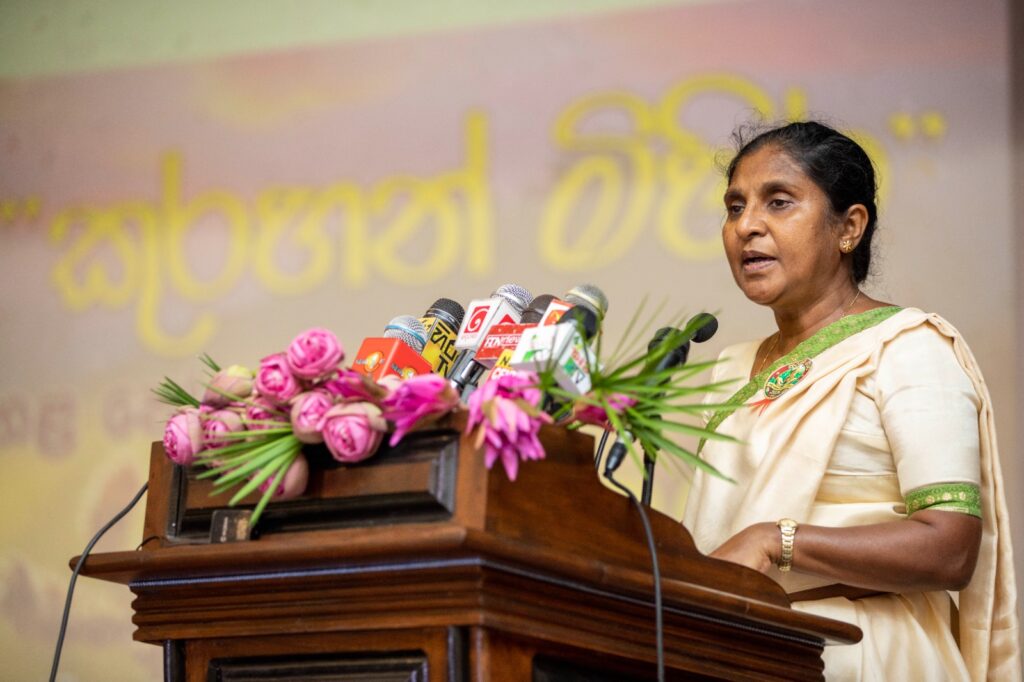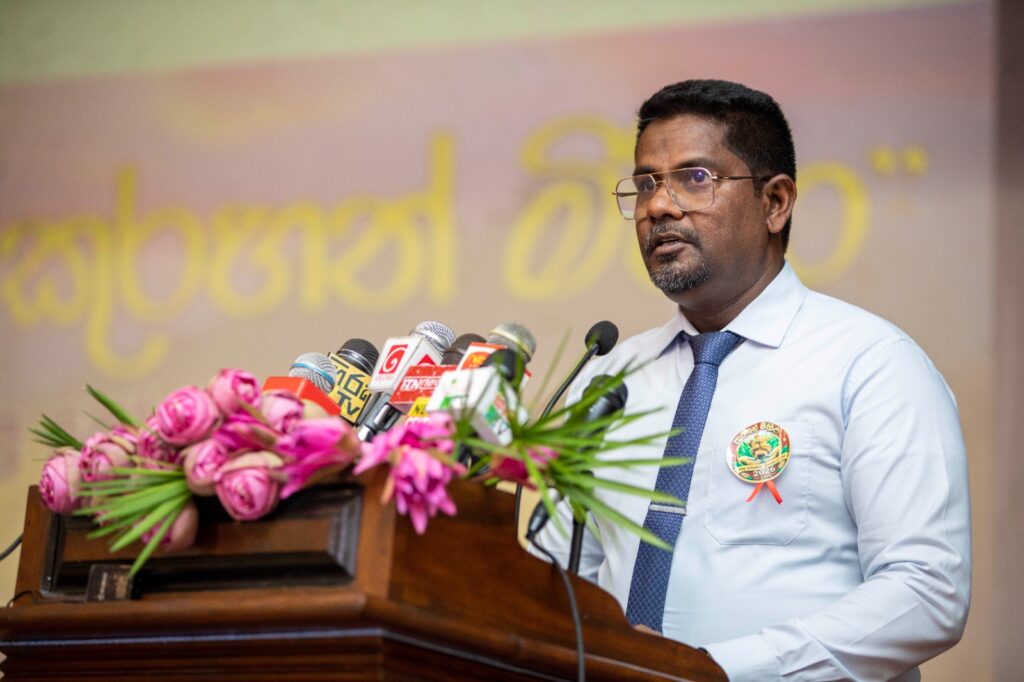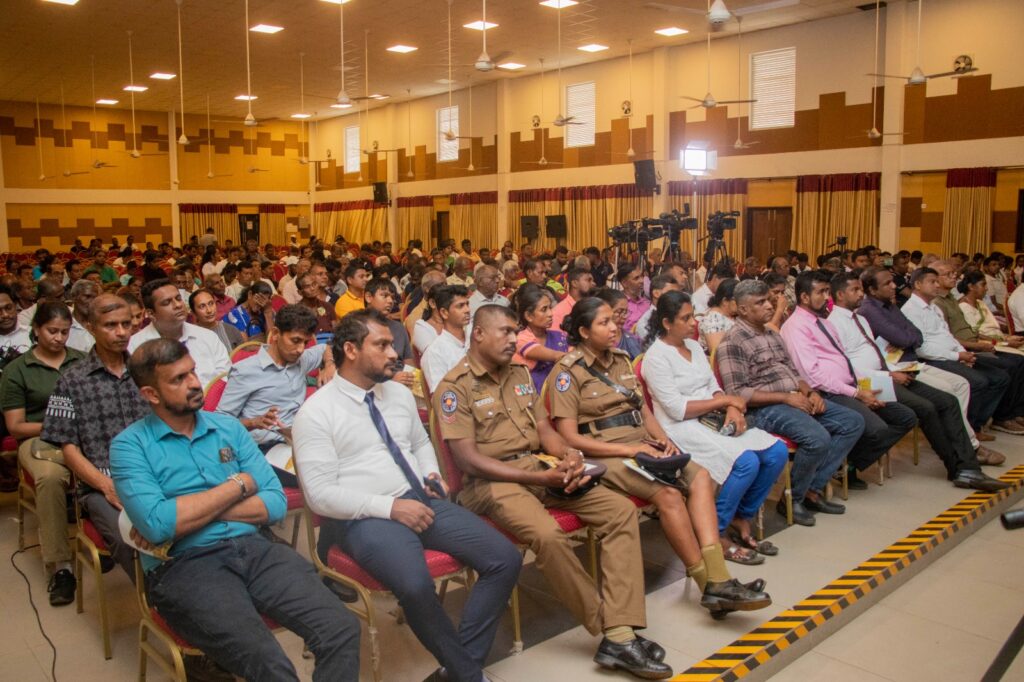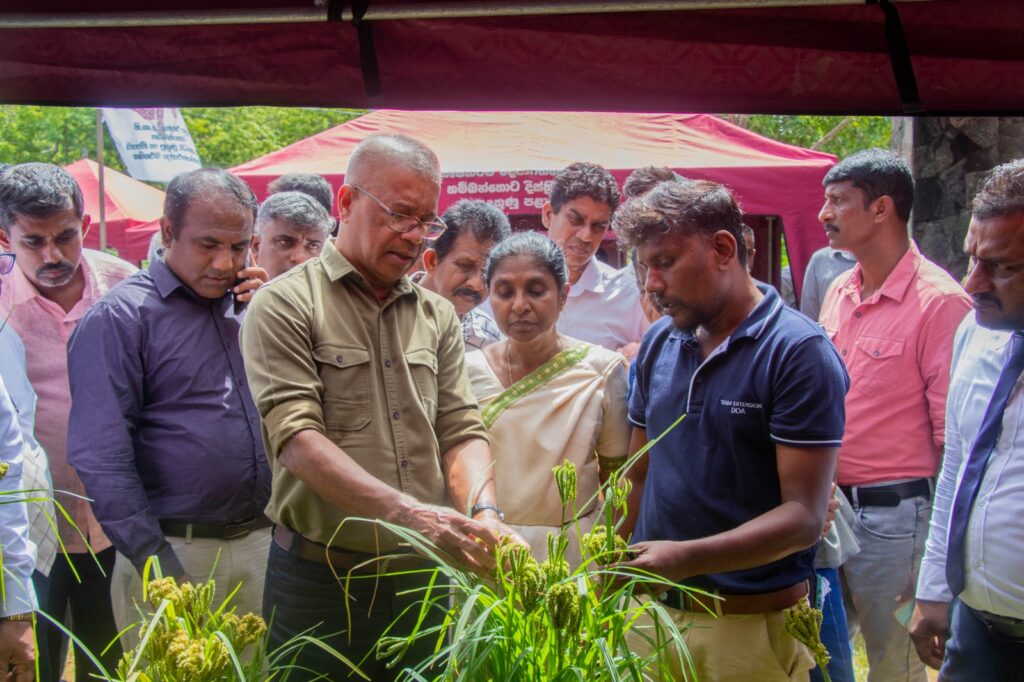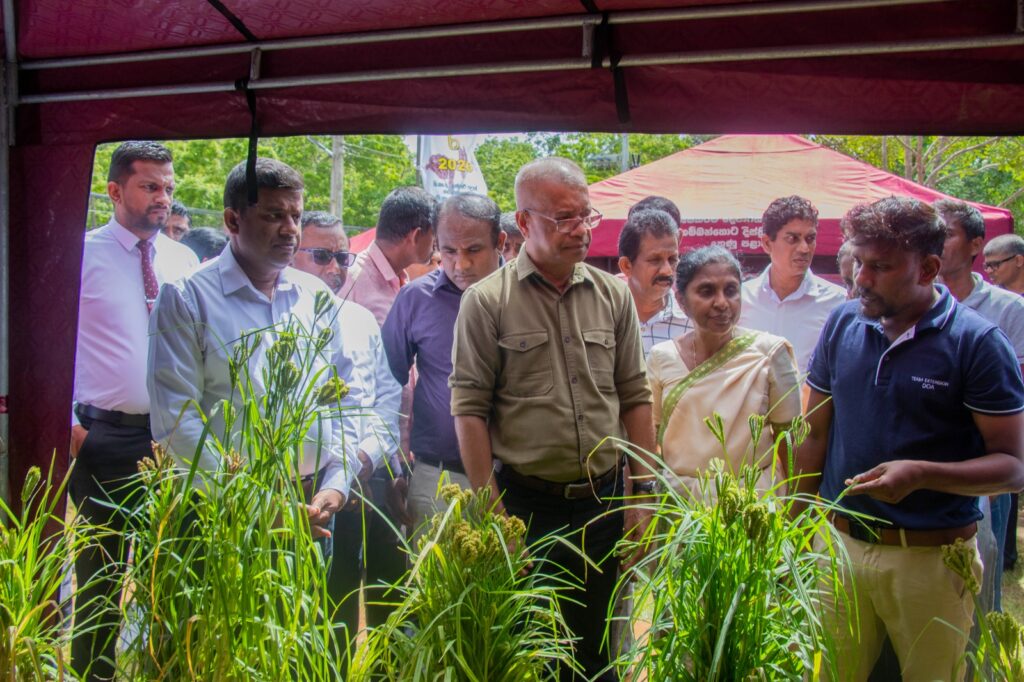
The “Kurakkan Mihira” Exhibition and the “Liyaddenpimmak” programme commenced in Lunugamvehera under the patronage of K.D. Lal Kantha, Minister of Agriculture, Livestock, Land and Irrigation.
The “Kurakkan Mihira” Exhibition and the “Liyaddenpimmak” programme began yesterday (05th) at the Lunugamvehera Multipurpose Building Premises, under the patronage of K.D. Lal Kantha, Minister of Agriculture, Livestock, Land and Irrigation.
The aim of this programme is to promote the production and use of locally grown finger millet (kurakkan) within the country. The Department of Agriculture is contributing to this effort. The “Kurakkan Mihira” Exhibition was held yesterday and it is held throughout today. It features a wide range of components, including finger millet-based foods and beverages, value-added products, new technical knowledge on finger millet cultivation, expert lectures, entrepreneurship guidance, street dramas and dance performances.
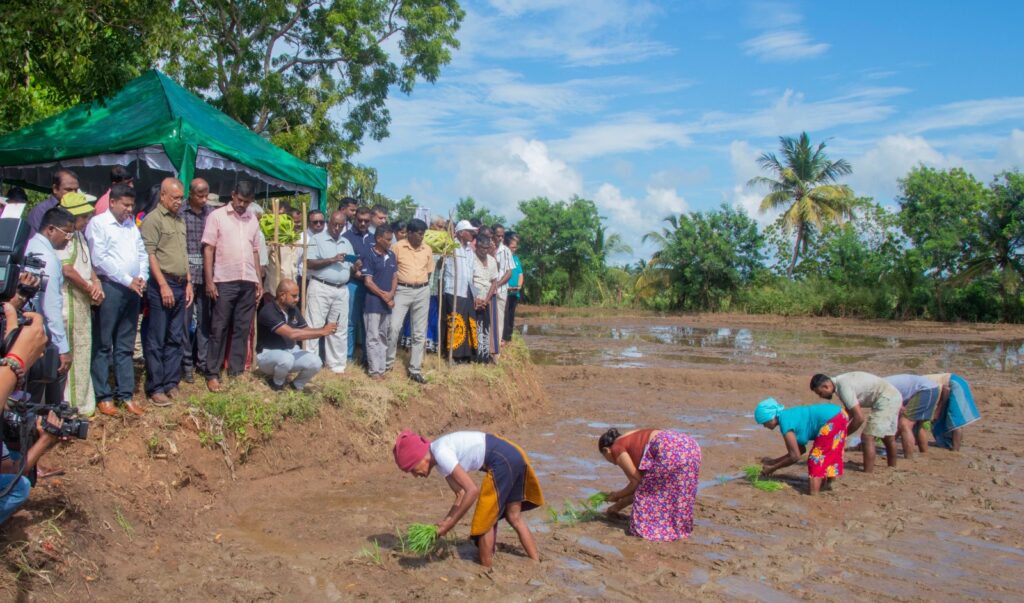
In addition to the “Kurakkan Mihira” Exhibition, the “Liyaddenpimmak” National Finger Millet Cultivation Campaign also began today at the Seenimulla paddy fields in Lunugamvehera. Under this programme, finger millet cultivation is introduced as an additional crop for paddy lands. The main objective of this initiative is to increase the country’s finger millet production and provide it to consumers at a fair price, thereby creating a healthy population. The programme’s other objectives include encouraging people to start local finger millet cultivation, earning a higher income in addition to rice farming and ensuring domestic food security.
Under the “Liyaddenpimmak” programme, farmers are encouraged to cultivate finger millet on one-eighth of an acre of paddy land, which is about 20 perches. The Department of Agriculture has taken steps to provide a subsidy of Rs. 10,000 to each farmer for this purpose. The first phase of the programme begins in Hambantota and it is scheduled to be implemented in the future so as to cover the Anuradhapura, Monaragala, Ampara and Polonnaruwa districts.
Participating in this programme, K.D. Lal Kantha, Minister of Agriculture, Livestock, Land and Irrigation, expressed his views.
“Policy decisions for a country are made by the government. The government, which has now completed two years, has taken strong policy decisions relating to the agriculture sector. It is the government that allocates funds for those policy decisions. However, it is the state that bears the greater burden of taking those policies forward successfully by connecting with the people. Only if the government, the state, and the people work together with proper understanding, we can reach the final objective we hoped for. If even one link in this chain becomes weak, it is difficult for us to achieve successful results.
As soon as we came to power, we increased the fertilizer subsidy for paddy cultivation. We also took a policy decision to provide a fertilizer subsidy for additional crops. In this Maha season, for the first time, additional crops will also receive Rs. 30,000 per hectare. This subsidy is given only if the additional crops are cultivated on paddy lands. The crops eligible for this subsidy are red onion, big onion, potato, chilli, green gram, black gram, cowpea, finger millet, maize, sesame, soybean and groundnut.
Our institutions have submitted a cultivation plan to deal with the El Nino situation. We believe that, in line with that cultivation plan, we will be able to successfully face the El Nino conditions.
It is our ministry’s responsibility to ensure food security and next, to improve the economic condition of the farming community. All of us are dedicated to these two matters. Although we are self-sufficient in rice, we are not secure when it comes to the other additional crops. A large quantity is imported. The cost of production for additional crops is high for us and we need to reduce it.
Our country requires nearly eight hundred thousand metric tons of maize. We cultivate only about half of that. Recently, we took a decision to stop importing maize from abroad. The aim of that decision is to encourage the local maize farmer.
Our hope is not to increase the extent of paddy land under rice cultivation. Instead, it is to raise the yield. For that purpose, the Yaya programme is being implemented. In this regard, farmers must follow the cultivation package recommended by the Department of Agriculture. In addition, for 11 selected Yayas (tracts), third-generation and fourth-generation fertilizers will be used.
In the programme we are launching today, we are beginning to cultivate finger millet on twenty perches of paddy land per acre. Finger millet requires only about one third of the water that paddy cultivation needs. It also yields an economic profit three times greater than paddy. To make finger millet popular among people, foods made from it must be popularized. Finger millet is a good answer to illnesses such as diabetes, high blood pressure and cholesterol. Under this programme, we should try to limit finger millet imports.
Deputy Minister of Land and Irrigation Arvinda Senarath Withana also participated in the occasion.