Sri Lanka Launched a Digital Seed Production Certification and Identification System to Ensure the Availability of Quality Seeds.
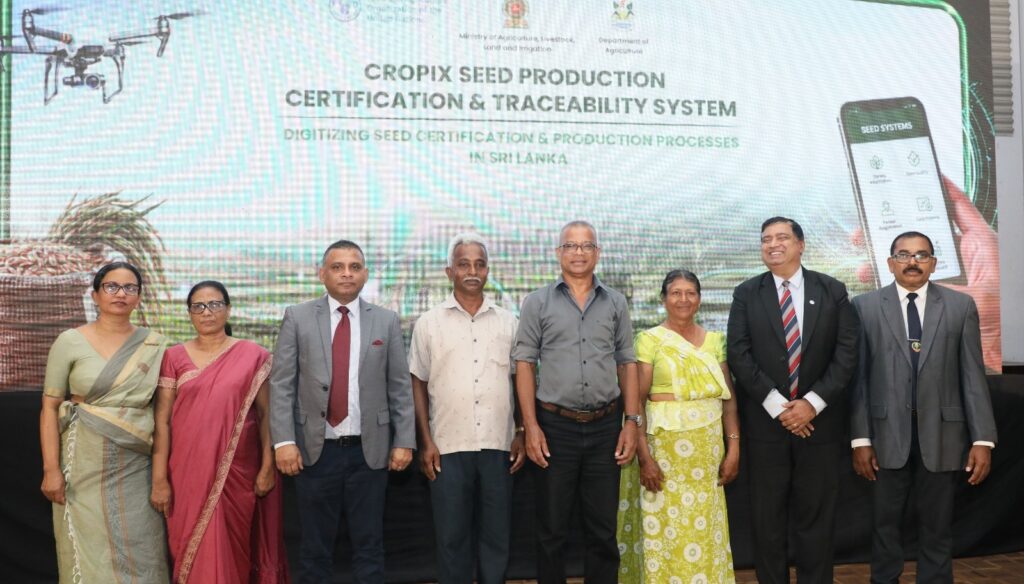
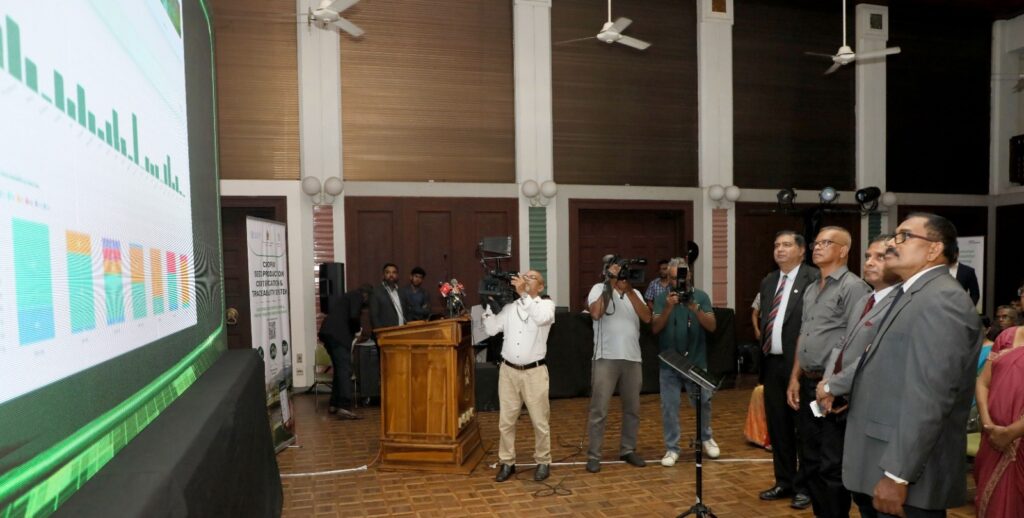
The Ministry of Agriculture, Livestock, Land and Irrigation and the Department of Agriculture, with the technical support of the United Nations Food and Agriculture Organization (FAO), launched the CROPIX Seed Production, Certification and Traceability System. This is an important step taken towards modernizing Sri Lanka’s seed sector through digital innovations.
This new system strengthens the seed production and certification process by improving transparency, efficiency, traceability, and coordination among stakeholders throughout the seed value chain. It is part of the broader ‘CROPIX’ Digital Agricultural Platform, and supports Sri Lanka’s effort to build a more resilient, efficient, and farmer-centered agricultural sector.
Quality seeds are crucial for increasing agricultural productivity, strengthening food security, and improving the livelihoods of farmers. However, Sri Lanka’s seed sector faces a range of challenges, including delays in seed production and certification processes, limited access to quality-assured seeds, fragmented information systems, and limited traceability within seed distribution networks.
The newly launched CROPIX Seed System addresses these challenges through an integrated system that connects seed growers, seed handlers, laboratories, field officers, administrators, and other agricultural information systems with one another. This platform enables real-time monitoring of seed production and certification activities, while also improving access to reliable seed-related information.
This system includes a national seed database with real-time data, web-based management tools, Application Programming Interfaces (APIs), digital field registration and certification processes, laboratory testing integration, seed stock and inventory management, as well as traceability functions covering the entire seed production and certification cycle.
This system also supports better coordination between the Seed Certification Service (SCS) and the Seed and Planting Materials Development Centre (SPMDC). Furthermore, this system is technically aligned with Sri Lanka’s Digital Economy Blueprint, initiated by the Ministry of Digital Economy.
It is expected that farmers will benefit from gaining easy access to quality seeds and real-time information through the CROPIX Seed Production, Certification and Traceability System. Furthermore, this will also provide government institutions and private sector stakeholders with the opportunity to make more accurate, data-driven decisions. The system also enhances transparency and accountability throughout the seed production and certification process.
This initiative contributes to Sri Lanka’s broader digital agricultural process, and aligns with national efforts to strengthen Digital Public Infrastructure (DPI) and agricultural interoperability frameworks.
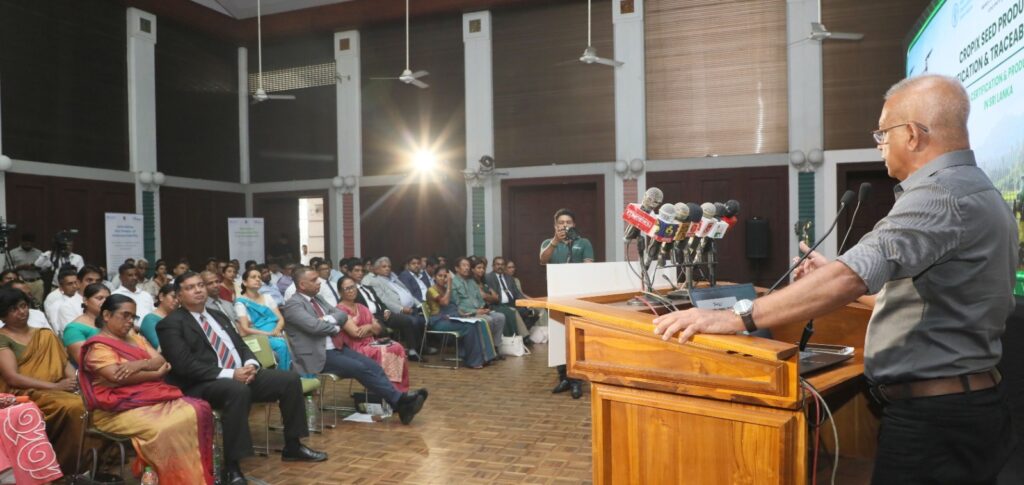
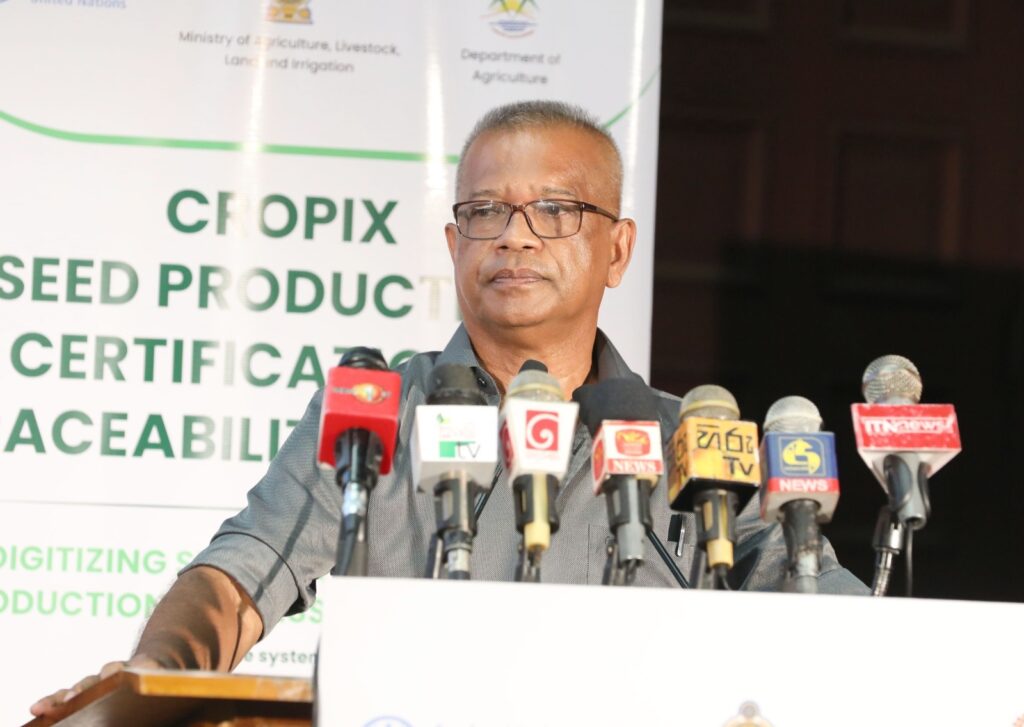
Minister of Agriculture, Livestock, Land and Irrigation K.D. Lalkantha expressed his views while participating in this program.
“When this programme was started, obstacles arose. Problems came. Today we were able to make this effort a success. In our country, there are one or two media outlets that do not allow any good work to take effect on the ground. There are some backward, obstructionist, dim-witted media that drag development backwards. It is very difficult to move these programmes forward while dealing with them.
At the time of Cyclone Ditwah, we were somewhat shaken. We were concerned that our seed paddy stock would be lost. We roughly estimated that farmers would manage it somehow. But we were unable to ascertain that with data. When an undertaking such as this is completed, I believe we will receive answers to such problems. That is why this effort is an extremely important task. As a government, we will provide the necessary support for this.
Today, we have taken a qualitative leap, combining quantitatively Again, this is all added up little by little, and the qualitative leap is made. That is the kind of work that took place here today. FAO is at the forefront of this. We are grateful to all institutions including the Department of Agriculture that intervened to make this a success. Let us move forward together with this qualitative leap.”